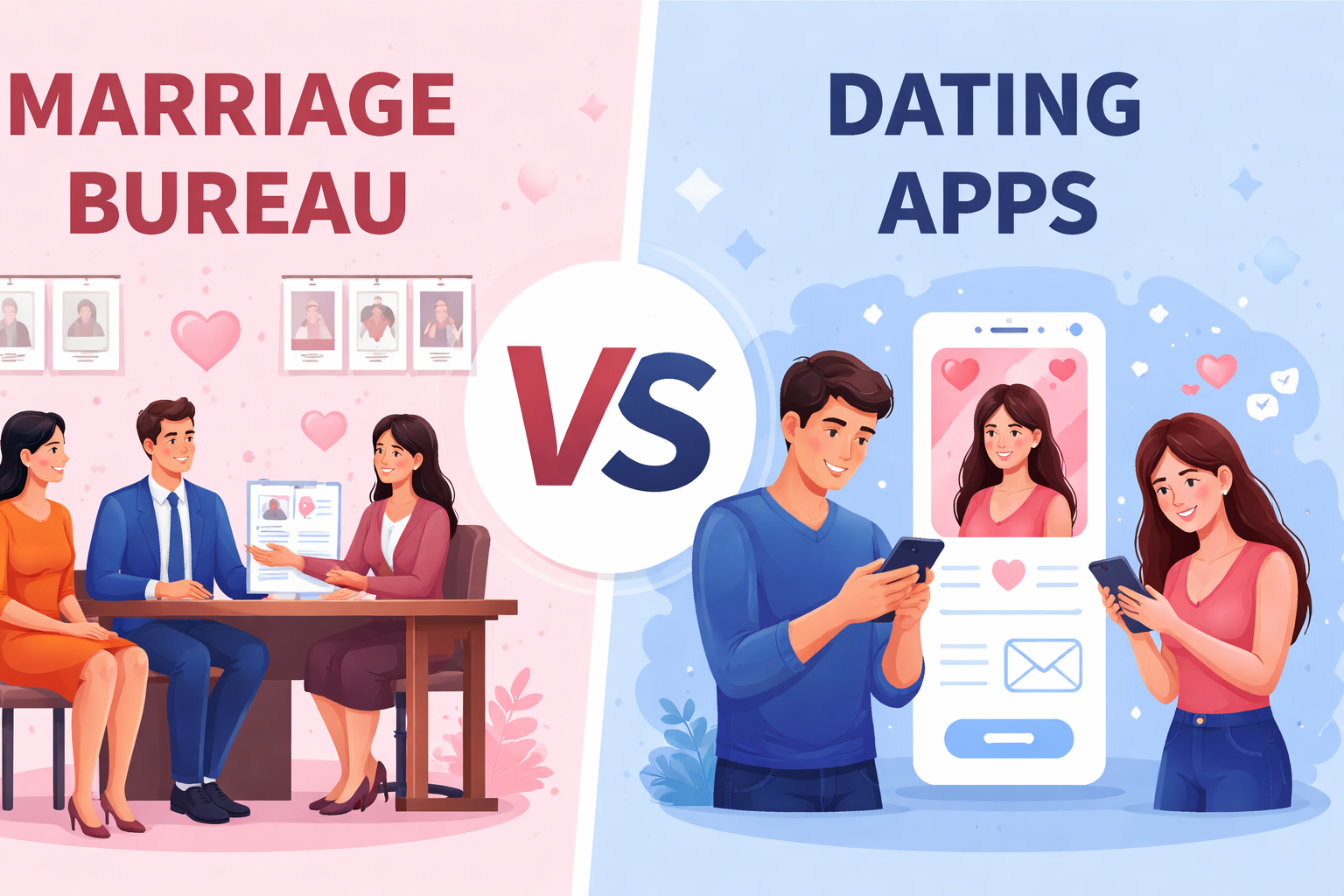
Marriage Bureau vs Dating Apps: Which Option is Best for Marriage?
What is a Marriage Bureau?
A marriage bureau is a service designed specifically to help individuals find suitable partners for marriage. It usually involves profile registration, background details, and preference-based matchmaking. In many cases, family involvement is also part of the process.
What are Dating Apps?
Dating apps are mobile or web platforms where users can connect with others based on interests, location, and preferences. These apps are commonly used for casual conversations, friendships, dating, and sometimes long-term relationships.
Key Differences
1. Purpose
Marriage bureaus focus on long-term commitments and marriage. Dating apps are often used for casual interactions, although some users may seek serious relationships.
2. Profile Authenticity
Marriage bureaus generally involve a higher level of verification, including personal and family details. Dating apps may have limited verification, which can sometimes lead to fake or incomplete profiles.
3. Family Role
In marriage bureaus, families often play an active role in the matchmaking process. Dating apps are usually individual-driven, with little to no family involvement.
4. Matching Process
Marriage bureaus offer more structured and preference-based matching. Dating apps rely on algorithms, swipes, and user activity.
5. Privacy and Security
Marriage bureaus typically maintain controlled access to personal information. Dating apps are more open, which can raise privacy concerns depending on usage.
Which Option is Better for Marriage?
The answer depends on individual goals. For those who are clear about marriage and prefer a guided, structured approach, marriage bureaus may be more suitable. For individuals who are exploring relationships or prefer independent interaction, dating apps can be an option.
Conclusion
Both marriage bureaus and dating apps serve different purposes. Understanding their differences can help individuals make informed decisions based on their personal preferences, cultural values, and long-term goals. Choosing the right platform depends on what one is truly looking for in a relationship.